



Book Review
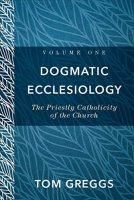
Dogmatic Ecclesiology, vol. 1, Priestly Catholicity
Tom Greggs has produced a noteworthy book treating ecclesiology in a serious, in-depth manner. This book purports to be a work of theology as a foundation, not a “how-to” book floating aimlessly on the currents of the day. In this he mostly is successful. Greggs rightly states that before one can “do church,” the identity of the Church must be established. Among contemporary books that treat ecclesiology, his approach to his subject is somewhat unique in that he uses the rubric of prophet, priest, and king to guide his subject. The resultant theological perspective produces a welcome ecclesiology. As per the title, this volume treats ecclesiology as it relates to the priestly role both of Christ and the Church.
His stated goal in this first of a projected three-volume, ten-year project is that the topics treated will be read both individually through a particular volume and “horizontally between volumes.” He helpfully lets his reader know where he is headed in this series by charting his chapter titles for all three volumes (p. lxi–lxii). He further illumines his direction in this particular volume by a summary of each chapter’s thesis in a section entitled “Abbreviated Chapter Theses for Volume 1” which follows the preface as well as a quite helpful, longer summation at the beginning of each individual chapter throughout the book. One can hope this quite necessary style of overview and summation will be maintained in the coming volumes. And in this necessity lies one of the greatest challenges of the book. While the topics within are exhaustively treated, they often also are exhausting to read due to the writing style. Sentences of multiple clauses and sub clauses using high diction span up to a quarter page or more in places, a style not seen for many decades in the UK and even longer in North America. Chopping through this style rewards the reader with a thorough treatment of the topic at hand, but few likely will have the patience to do so. For those whose first language is not English, comprehension especially will be a challenge. Accordingly, the hard work Greggs obviously invested, using the giftedness he certainly possesses, will want for what could have been a much wider reading audience.
Related to this is the use of English in an unnecessarily trendy manner. The introduction to this volume apprises the reader that Greggs will not be using gendered pronouns for God since “God is neither male nor female” (p. xxxii). The resultant text combined with the already difficult writing style presents an unappetizing word salad in places such as “God as God self-determines Godself for creation in God in God’s eternal being, known in God’s revelation to the life of the church” (p. xxxvii). Greggs does recognize this will create readability problems and asks the reader to “forgive some of the clunky phrasing”. He repeats this request later in the book. Alas, he would have served his readers better by making his gender-neutral case as he does in a footnote and asking forbearance from those who are offended by the use of male personal pronouns for God.
He further pushes this linguistic trendiness in the body of the book with the use of a universal “she” and “her.” All this is a pity since what could have been a significant, lasting contribution also will be marked as time-bound in its trendiness. Thankfully, the trendiest and most awkwardly composed portions of the book are confined to the preface. Since one encounters this at the outset, one can hope that potential readers will not put this book aside.
As remarkable an effort as is presented in this work, a recommendation is difficult to support either for theological schools or one’s personal library. One can hope that a second edition of this obviously thoughtful, thorough work will resolve the issues of readability and linguistic trendiness, and that these issues will be addressed before publication of volumes two and three.


