



The Monday After • Sep 29, 2025
Forgiven People Forgive
 Darren Carlson
Jesus said:
For if you forgive others their trespasses, your heavenly Father will also forgive you, but if you do not forgive others their trespasses, neither will your Father forgive your trespasses.
I've been thinking about forgiveness this week. Forgiveness is hard. It raises countless questions and exceptions. Last week, at Charlie Kirk's funeral, his wife, through tears, said she forgave the man who killed her husband. It was powerful.
Jesus ties our experience of the Father's forgiveness to our posture toward those who've sinned against us. Here's the heart of it: you cannot look at someone who has wronged you and withhold forgiveness unless, at some level, you feel superior to them. Unforgiveness exposes unfamiliarity with grace.
Let me make three brief biblical clarifications to push us deeper into obedience.
1) Our culture's script about forgiveness is too small.
We often hear that forgiveness is mainly therapeutic—"Do it for your peace of mind." True, forgiving can free you from corrosive bitterness. But Christian forgiveness is first Godward and other-oriented. We forgive to honor God and for the good of the offender (Rom. 12:17–21; Eph. 4:32).
There's also a countercurrent that views forgiveness as an obstacle to justice and victimhood as a form of social capital. Scripture refuses both: it neither trivializes harm nor weaponizes grievance. Jesus' way gives the power to do what He commands, because it anchors forgiveness in the gospel, not in self-help or social trends.
2) Forgiveness is conditional on repentance
This might surprise you, but forgiveness is conditioned on repentance (Luke 17:3–4). The New Testament does not command us to forgive someone who persists in unrepentance. To forgive without repentance can cheapen grace and enable harm. If you find this to be out of bounds, consider this compilation from Chris Brauns of trusted theologians teaching on the conditionality of forgiveness.
Paul models this soberly. He names Alexander the coppersmith: "He did me great harm; the Lord will repay him according to his deeds" (2 Tim. 4:14). He entrusts justice to God. Likewise, he comforts the persecuted: "God is just...He will repay...He will give relief" (2 Thess. 1:6–8). The Bible's thrust is: don't take revenge, love your enemy, pray for your persecutor (Matt. 5:44). Justice will come—either borne by Christ at the cross or borne by the unrepentant in judgment.
So what do we do when repentance is absent? We lay down ill will, hand our anger to God, refuse retaliation, and stand ready to forgive the moment repentance appears. Readiness is not passivity; it's active obedience—doing good, setting wise boundaries, seeking safety, and telling the truth—while you entrust ultimate justice to God.
3) What forgiveness is (and how to practice it).
Forgiveness has content. Repentance, too. Repentance uses specifics: "I did this. No defense. I sinned against you. I'm sorry. Will you forgive me?" Vague apologies dodge responsibility.
Let me press this gently: when is the last time you asked anyone for forgiveness—with specifics? A friend, a spouse, a child? Often, we study texts on forgiving others and skip the mirror of asking for forgiveness ourselves. In my own family, I've asked Amy's forgiveness—by name, in front of our kids, with specifics. I want them to know their dad is a sinner who seeks grace. "I'm sorry. You're right. I was wrong."
When You Forgive
When someone asks for forgiveness, I've been helped by Ken Sande's Peacemaker framework—simple, memorable promises I make that reflect the Bible's pattern:
- I will not dwell on this incident.
- I will not bring up this incident and use it against you.
- I will not talk to others about this incident.
- I will not allow this incident to stand between us or hinder our relationship.
These are not feelings; they are commitments. Making them is how love covers a multitude of sins (1 Pet. 4:8).
There are some guardrails.
- Forgiveness does not minimize sin or abandon consequences.
- Forgiveness does not immediately trust; trust may be rebuilt slowly—or not at all—depending on repentance and fruit.
- Forgiveness does not make it easy to be harmed again.
Gospel Power
None of this is possible by willpower. It flows from the cross. On the night He was betrayed, Jesus prayed for His enemies. On the cross He said, "Father, forgive them." He bore our debt fully, so the Father's forgiveness toward us is not sentimental—it is just (Rom. 3:26). If the King has canceled your unpayable debt, how can you choke your brother over a payable one? (Matt. 18:21–35) So come to the Father again today. Receive afresh His pardoning mercy. Then extend what you have received. Forgiven people forgive.
I once assigned my friend Bill—a Messianic Jew, Jewish by ethnicity and a believer in Jesus—to teach the Bible to a group of Iranian Christians, all former Muslims. I hadn't known Bill was Jewish when I asked him. Given the tensions between Iranians and Jews, it felt like an unlikely match. Headlines often tell a story of suspicion and hostility.
Then something unexpected happened. When Bill mentioned he was Jewish, the room fell silent. Several Iranians began to weep. They rose, embraced him, and called him "brother." In that moment, the wall of hostility fell.
For the rest of the week, Bill taught, they listened, and they shared their tables—united in Christ. It was a living picture of the gospel's power to reconcile.

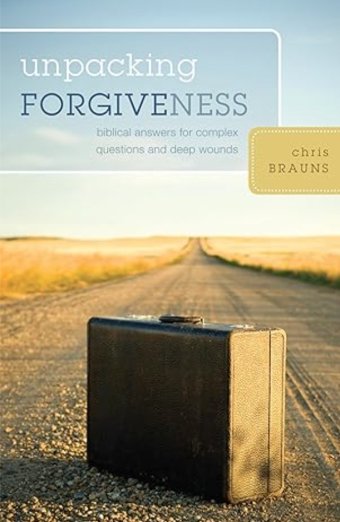
I mentioned Chris Brauns earlier, and I want to commend his book Unpacking Forgiveness. Our wounds run too deep to heal ourselves, and our questions are too tangled to unravel without God’s wisdom. Brauns moves beyond a feel-good notion of automatic forgiveness, holding together the beauty of God’s grace and the necessity of forgiveness with the Bible’s call to repentance, justice, and genuine reconciliation.
Thanks for checking in.
Sign up here to receive Darren Carlson's The Monday After email. This weekly newsletter is designed to encourage your faith and share inspiring stories of what God is doing around the world. Each edition features a short devotional, a story that will give you a glimpse of His work in unexpected places, and a resource you might find helpful.
8.10.26The People of the Book Who Don't Read
You can read. You've been able to read since you were a small child, so long that you can't remember what it felt like not to. You can't look at a stop sign and not read it. Literacy has rewired your brain. And because you read in English, you've been shaped […]
8.3.26A Non-Anxious Presence
Ecclesiastes 10 is a chapter about how small things ruin big things — dead flies in the perfume, one sinner destroying much good. Qohelet walks through an upside-down world where fools sit in high positions and princes walk like slaves. But before he describes that world, he tells you how to […]
7.27.26Outrage Porn
"As charcoal to embers and as wood to fire, so is a quarrelsome person for kindling strife." — Proverbs 26:21 (NIV) I do this more often than I'd like to admit: I'll come across some argument online — a thread, a controversy, a "this changes everything" post — and it looms […]
7.20.26The Stream
"There is a river whose streams make glad the city of God." (Psalm 46:4) Psalm 46 mentions water twice, and the contrast is the whole point. First, the sea—roaring, swelling, threatening: "though its waters roar and foam and the mountains quake with their surging" (vv. 2–3). The sea is the ancient […]


