



The Monday After • Oct 6, 2025
First Things First
 Darren Carlson
I know many of you have kids in youth sports. I last coached high school basketball in 2009; this year, I have jumped back in as a head coach—and wow, a lot has changed. Four observations:
1) The youth-sports industry feeds on parental anxiety.
There's real money to be made from moms and dads afraid their kids are falling behind. You can pay $40 a month for "speed and plyometric" memberships for 11-year-olds or $100 for a single skills session with a college player. The pitch is simple: if you don't buy in, your child will be left behind.
2) The talent gap is narrowing.
The elites are still elite. But the average player now trains and lifts year-round, so the overall floor has risen. On the whole, kids are a bit faster, stronger, and more skilled than they were a decade ago.
3) Family life often takes a back seat.
To keep pace, many families surrender a lot of autonomy. Practices, games, and travel teams take over the calendar—so much so that the schedule runs the home. Vacations get bumped for weekend tournaments, and if a child skips, parents worry they'll fall behind.
4) Sports vs. Jesus isn't either/or—but it's functioning that way.
A youth pastor told me that in the last ten years, only one family in his ministry chose church over sports when they conflicted. That's striking. It suggests that for many, tournaments and practices are non-negotiable while church involvement is increasingly optional. It's now normal to hear, "Sorry we've been gone; we had a flag football camp the last six weeks."
These trends raise good questions: What story are we telling our kids about what matters most? How do we form habits of faith if gathered worship is the thing we regularly skip? Is there a way to pursue sports with excellence without sidelining spiritual formation?
Some argue—and I often have—that sports build character. In some programs, that's true. But research such as the Hahm–Beller Values Choice Inventory (spanning thousands of athletes over roughly 15 years) suggests a sobering pattern: the longer athletes—male or female—compete, especially in team sports, the lower their scores in moral reasoning tend to be. In other words, sport can build social character (grit, teamwork) while leaving moral character under-formed. At the extreme, college athletes have been shown to demonstrate little development in principles like honesty and justice.
It seems the way we are doing sports is harming us.
Hebrews urges believers not to give up meeting together (Heb. 10:24–25)—a plea originally addressed to Christians facing persecution, not scheduling pressure. Today, pastors make a similar plea, not because people fear for their lives, but because of soccer tournaments, basketball practices, and volleyball matches. Sports themselves aren't the problem; they're a gift. But when the sports calendar is non-negotiable and worship is negotiable, kids hear that loud and clear. Good things make bad gods. They demand—and they punish—when we won't go along with the program.
So let's teach our kids to love their teammates, play hard, and keep first things first. Let's pursue excellence without sacrificing formation. And let's make sure our calendars tell the same story our mouths do about what matters most.

Let me share a few ways God has used youth coaching in my life over the last few years.
Dawsen. I love this kid. I coached him in youth baseball and coached against him in basketball. Two Easters ago, he walked into our church and committed his life to Christ. This past Easter, I had the joy of baptizing him.
Nate. I love Nate. His dad and I coached youth basketball and baseball together. A week after basketball season ended in 2019, his dad died of a heart attack. By God's providence, I was already in Nate's life. I still pray regularly for him and his family.
My college players. Twenty years ago, while I was in seminary, I coached at an NAIA university. Many of those players now have families of their own—and they still call me "Coach." I am amazed at all the things they are doing.
Coaching is a privilege and a mission field. Let's keep our loves rightly ordered—and use the games we love to point people to the God we love.

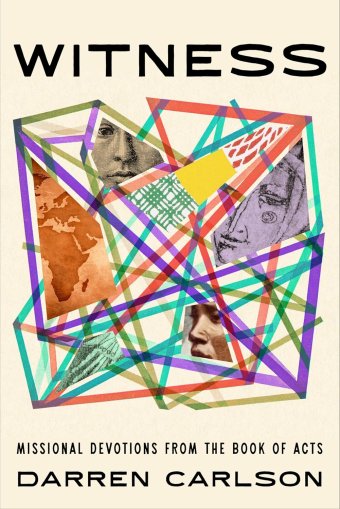
I’m thrilled to share that my new book, Witness, releases later this month—a 60-day devotional through Acts. Each day pairs Scripture with stories of modern believers, drawing parallels to the first-century church. I wrote it to encourage you and help you get your eyes off of yourself. You can read a sample here.
How you can help spread the word (thank you!):
- Leave a review on Amazon or Goodreads—early reviews make a huge difference.
- Order in bulk for your church, small group, or friends—significant discounts are available here.
- Share online—post a photo, a favorite line, or the sample link and invite others to read.
Thanks for checking in.
Sign up here to receive Darren Carlson's The Monday After email. This weekly newsletter is designed to encourage your faith and share inspiring stories of what God is doing around the world. Each edition features a short devotional, a story that will give you a glimpse of His work in unexpected places, and a resource you might find helpful.
8.10.26The People of the Book Who Don't Read
You can read. You've been able to read since you were a small child, so long that you can't remember what it felt like not to. You can't look at a stop sign and not read it. Literacy has rewired your brain. And because you read in English, you've been shaped […]
8.3.26A Non-Anxious Presence
Ecclesiastes 10 is a chapter about how small things ruin big things — dead flies in the perfume, one sinner destroying much good. Qohelet walks through an upside-down world where fools sit in high positions and princes walk like slaves. But before he describes that world, he tells you how to […]
7.27.26Outrage Porn
"As charcoal to embers and as wood to fire, so is a quarrelsome person for kindling strife." — Proverbs 26:21 (NIV) I do this more often than I'd like to admit: I'll come across some argument online — a thread, a controversy, a "this changes everything" post — and it looms […]
7.20.26The Stream
"There is a river whose streams make glad the city of God." (Psalm 46:4) Psalm 46 mentions water twice, and the contrast is the whole point. First, the sea—roaring, swelling, threatening: "though its waters roar and foam and the mountains quake with their surging" (vv. 2–3). The sea is the ancient […]


