



The Monday After • Jul 27, 2026
Outrage Porn
 Darren Carlson
"As charcoal to embers and as wood to fire, so is a quarrelsome person for kindling strife." — Proverbs 26:21 (NIV)
I do this more often than I'd like to admit: I'll come across some argument online — a thread, a controversy, a "this changes everything" post — and it looms so large in my feed that I assume it must be looming just as large everywhere else. So I'll bring it up with a friend, fully expecting them to already be tracking the same crisis I am, and they'll just look at me blankly. Never heard of it.
I've been on the other end of it too. Someone will describe some online firestorm to me with total certainty that I'm already inside it — because it has taken up so much space in their mind that they assume it must have taken up the same space in mine, and by extension, in everyone's.
- Online Culture: The SBC is fractured, in free fall, losing its focus, and barely holding together.
- In-Person Culture: The SBC met this week, and by most accounts the gathering was warm, substantive, and unified in ways the internet never quite captures.
- Online Culture: The Gospel Coalition has drifted left and is hemorrhaging influence. People aren't listening to them anymore.
- In-Person Culture: Nine thousand women are gathering for their conference this week to sit under God's Word and sing.
Division gets clicks; unity gets ignored. The people most invested in an institution's drama are often the least representative of the institution itself. Meanwhile, thousands of ordinary believers show up, sing together, take notes, hug friends, and go home encouraged — none of which generates a single viral post.
Solomon saw this pattern three thousand years before there was an algorithm to blame for it. "A fool's lips bring him strife, and his mouth invites a beating" (Proverbs 18:6, NIV). The quarrelsome don't just stumble into conflict — they go looking for it, because something in them is fed by the fight itself. And charcoal doesn't start a fire. It keeps one burning, long after the original spark is forgotten. Online discourse runs on exactly this supply chain: someone strikes the match, and a thousand quarrelsome voices show up as charcoal, sustaining a fire that would otherwise have gone out in an hour.
This isn't an accident of culture. It's baked into the architecture. Social psychologist Jonathan Haidt has traced this back to a specific design decision: when platforms added "like," "share," and "retweet" buttons, ordinary opinions stopped staying among friends and started performing in front of strangers — strangers who could respond with public scorn. That shift, Haidt argues, didn't just make the internet meaner. It damaged institutions, with the effect most visible in universities, scholarly associations, creative fields, and political organizations at every level. The outrage isn't a byproduct. It's the product. The algorithm isn't broken; it's working exactly as designed, and what it's designed to do is keep the embers glowing.
Tony Reinke names this with an even sharper phrase: "outrage porn" — content engineered to provoke our impulse to judge, to punish, to feel righteous while feeling nothing at all for the actual person on the other end. He roots his warning in James 4, where the apostle confronts a church quarreling and slandering one another, asking the question that still lands on us: who are you to judge your neighbor? Solomon and James are saying the same thing from two different centuries: the quarrelsome person isn't a passive victim of online culture. He's the charcoal. He's supplying the fuel.
So here's what I try to remember, and what I'd ask you to remember too: the loudest voice in a feed is not a representative sample. It's a self-selected, conflict-rewarded sliver — the people with the most energy for the fight, not necessarily the people with the most accurate picture of what's actually happening. The volume of an opinion online tells you nothing about how many people hold it, or how true it is. It only tells you that outrage performs well, and that someone, somewhere, was willing to be charcoal for it.
That doesn't mean every online concern is wrong. Real drift is real. Real division is real. But Scripture has never measured the health of God's people by what trends. It measures it by whether they gather, whether they sing, whether they sit under the Word together, and whether they go home and love their actual neighbor — the one across the table, not the one in the replies.
So the next time some argument online feels like it's swallowing the whole world, ask a friend about it first. You may find, like I so often do, that you're the only one in the room who's heard of it. And you may find, like those nine thousand women, that the real story was never the one trending.
I like to tell stories in this section, but let me drive home the devotional in another way. I used to think I had a handle on what God was doing around the world. I know lots of people. I've done a movie. I've read a lot. I have a PhD...etc.
But then I meet a group I've never heard of before. And they have an extensive network that I never knew existed. And that group has so much going on that blows up my categories for what I think is happening.
Rinse and repeat.
It just reminds me how finite we are. It reminds me that I can barely get a handle on what is going on. It is a reminder that my view is shaped by such a limited experience that I can never escape from.
God is doing a million things. I might know five. I probably misinterpret four. God is good.

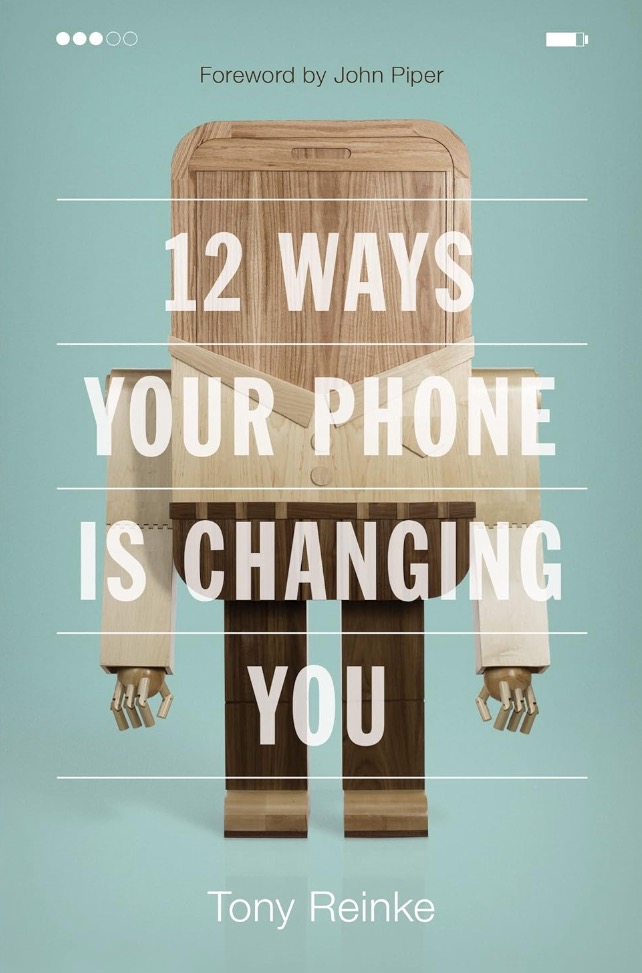
It's a little outdated, but still worth reading.
Thanks for checking in.
Sign up here to receive Darren Carlson's The Monday After email. This weekly newsletter is designed to encourage your faith and share inspiring stories of what God is doing around the world. Each edition features a short devotional, a story that will give you a glimpse of His work in unexpected places, and a resource you might find helpful.
8.10.26The People of the Book Who Don't Read
You can read. You've been able to read since you were a small child, so long that you can't remember what it felt like not to. You can't look at a stop sign and not read it. Literacy has rewired your brain. And because you read in English, you've been shaped […]
8.3.26A Non-Anxious Presence
Ecclesiastes 10 is a chapter about how small things ruin big things — dead flies in the perfume, one sinner destroying much good. Qohelet walks through an upside-down world where fools sit in high positions and princes walk like slaves. But before he describes that world, he tells you how to […]
7.20.26The Stream
"There is a river whose streams make glad the city of God." (Psalm 46:4) Psalm 46 mentions water twice, and the contrast is the whole point. First, the sea—roaring, swelling, threatening: "though its waters roar and foam and the mountains quake with their surging" (vv. 2–3). The sea is the ancient […]
7.13.26Be Still?
"Be still, and know that I am God." (Psalm 46:10) We've put the first half of this verse on coffee mugs and tee shirts—as if it were mostly about sitting quietly with your coffee somewhere peaceful. But read in context, it's far weightier than that. This command comes right after nations […]


