



The Monday After • Aug 3, 2026
A Non-Anxious Presence
 Darren Carlson
Ecclesiastes 10 is a chapter about how small things ruin big things — dead flies in the perfume, one sinner destroying much good. Qohelet walks through an upside-down world where fools sit in high positions and princes walk like slaves. But before he describes that world, he tells you how to live in it:
If a ruler's anger rises against you, do not leave your post; calmness can lay great offenses to rest (Ecclesiastes 10:4).
Do not leave your post. Do not flee, do not explode, do not match his agitation with yours. Stay, and stay calm.
Sit with that for a moment, because I think it describes something many of us have never learned to do. Verse 4 is a portrait of what counselors would call a differentiated person — someone whose internal state isn't dictated by the emotional state of the person in front of them. The ruler's anger rises. The undifferentiated person is immediately overwhelmed by it: he absorbs the anger and panics, or mirrors it and retaliates, or capitulates and abandons his convictions along with his post. His inner well-being is entirely determined by the ruler's well-being.
But the wise person has a boundary — not a wall of indifference, but a settled sense of who he is and whose he is, one that doesn't dissolve when someone else loses control. He can be okay even when someone else is not okay. He can stand in the room with an angry boss, an anxious spouse, a raging critic, and remain himself: present, calm, unmoved from his post.
This is not stoic detachment, and it is not people-pleasing appeasement. Some of you know exactly what I mean — someone rages and you either check out or slide into appeasement mode to make them calm down. Neither is what Qohelet describes. He describes composure — the composure of a person whose footing is somewhere the ruler's anger cannot reach. And notice the fruit: calmness can lay great offenses to rest. A non-anxious presence doesn't just protect you; it changes the dynamic of the room you're in.
If you lead anything — a church, a team, a classroom, a home — this matters doubly. A non-anxious leader refuses to be governed by the emotional reactivity of others. He doesn't lead based on the feelings of the group, doesn't succumb to knee-jerk reactions, doesn't fire off the immediate email or call the emergency meeting. (My own tell: you can spot an anxious leader by whether he has to have a meeting right now.) Just calm, deliberate leadership — the kind that de-escalates rather than matches the temperature of the room.
For the Christian, that footing has a name. You can keep your post before an angry ruler because you serve a greater King whose favor does not rise and fall. Your identity is hidden with Christ, so another person's fury — even a powerful person's fury — cannot tell you who you are. Jesus himself kept his post before Herod's mockery, Pilate's threats, and the Sanhedrin's fury with a composure that stunned them: "he did not retaliate; when he suffered, he made no threats" (1 Peter 2:23). You don't have to fix the upside-down world, flee it, or rage at it. You can hold your post within it.
Here's an assignment for the week. Get a little curious about how you react to the anxiety of others. When someone near you loses their footing, watch yourself. Do you absorb? Mirror? Appease? Or can you stay — present, calm, at your post — because you know whose you are?
John Paton, the Scottish missionary to the New Hebrides in the 1800s, lived out Ecclesiastes 10:4 more literally than most of us ever will. He served on islands where missionaries before him had been killed, and more than once, armed men surrounded his house, intent on ending his work and his life. His journals record night after night of danger — and again and again, his response was neither flight nor fury but staying at his post, calmly, in prayer. He later wrote of one such night that he rested in the presence of Jesus — "with my dear Lord and Saviour, nothing else in all the world could so have impressed me" — and that his assailants, finding no panic to feed on, dispersed. Paton outlasted the rage of chiefs and warriors not by matching their temperature but by a composure anchored somewhere their spears could not reach. Many on those islands came to Christ in the decades that followed — some of them the very men who had once surrounded his home.

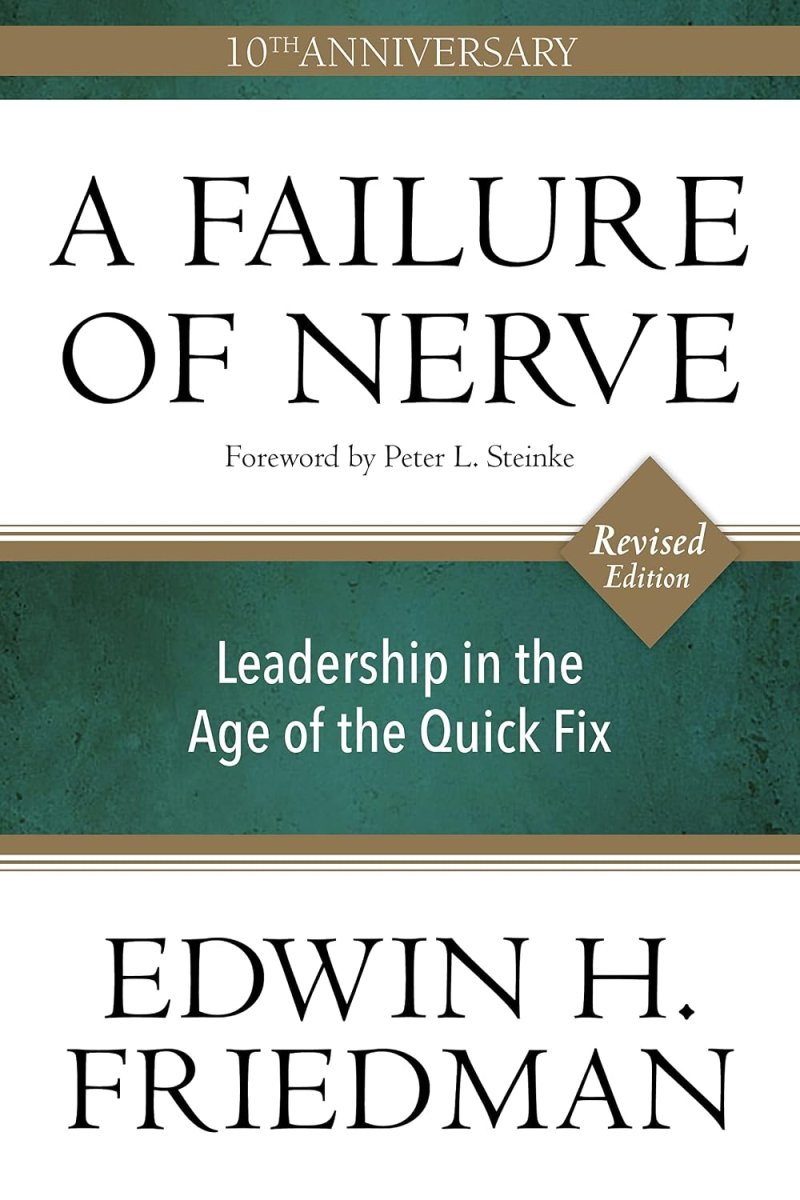
Edwin Friedman, A Failure of Nerve: Leadership in the Age of the Quick Fix. Friedman, a rabbi and family therapist, is the one who put the phrase "non-anxious presence" into the leadership vocabulary, and this book is the fullest treatment of it. He argues that what organizations, families, and nations most need is not better technique but leaders who can regulate themselves in the middle of everyone else's reactivity.
Thanks for checking in.
Sign up here to receive Darren Carlson's The Monday After email. This weekly newsletter is designed to encourage your faith and share inspiring stories of what God is doing around the world. Each edition features a short devotional, a story that will give you a glimpse of His work in unexpected places, and a resource you might find helpful.
8.10.26The People of the Book Who Don't Read
You can read. You've been able to read since you were a small child, so long that you can't remember what it felt like not to. You can't look at a stop sign and not read it. Literacy has rewired your brain. And because you read in English, you've been shaped […]
7.27.26Outrage Porn
"As charcoal to embers and as wood to fire, so is a quarrelsome person for kindling strife." — Proverbs 26:21 (NIV) I do this more often than I'd like to admit: I'll come across some argument online — a thread, a controversy, a "this changes everything" post — and it looms […]
7.20.26The Stream
"There is a river whose streams make glad the city of God." (Psalm 46:4) Psalm 46 mentions water twice, and the contrast is the whole point. First, the sea—roaring, swelling, threatening: "though its waters roar and foam and the mountains quake with their surging" (vv. 2–3). The sea is the ancient […]
7.13.26Be Still?
"Be still, and know that I am God." (Psalm 46:10) We've put the first half of this verse on coffee mugs and tee shirts—as if it were mostly about sitting quietly with your coffee somewhere peaceful. But read in context, it's far weightier than that. This command comes right after nations […]


